
Posted on 5 August 2026 | By Satvik Yatra Team
Top Temples to Visit in Ayodhya in 2026: Complete Pilgrim's Guide
Ayodhya, the sacred birthplace of Lord Shri Ram, is one of the seven mokshadayini puris of Hinduism—the holy cities believed to grant liberation to the soul. Set along the gentle banks of the Saryu River, this ancient city is where the timeless story of the Ramayana was lived, and where devotion still fills every lane, ghat, and temple.
For most pilgrims, Ayodhya means the magnificent Ram Mandir. But the city is far more than a single shrine. Around the Janmabhoomi cluster is a constellation of temples, each linked to a specific moment from the life of Lord Ram, his family, and his devotees. Hanuman Garhi, Kanak Bhawan, Dashrath Mahal, Nageshwarnath, Treta Ke Thakur, Sita Ki Rasoi, and Mani Parbat together turn a single darshan into a complete spiritual journey.
This guide walks you through the top temples to visit in Ayodhya in 2026—their history, significance, timings, and practical tips—so you can plan a meaningful, well-paced pilgrimage. For a deeper look at timings and darshan arrangements, see our Complete Guide to Visiting Ram Mandir in 2026.
Quick Reference: Ayodhya Temple List at a Glance
Here is a snapshot of the best temples in Ayodhya, their main deities, and how far each sits from the Ram Mandir. Use this as a quick planner before you read the detailed sections below.
| Temple | Main Deity | Distance from Ram Mandir | Approx. Visit Time | Highlights |
|---|---|---|---|---|
| Ram Mandir | Shri Ram Lalla | At the site | 1–2 hours | Grand Nagara-style temple at Lord Ram's birthplace |
| Hanuman Garhi | Lord Hanuman | ~1 km | 30–45 min | Hilltop shrine; darshan here before Ram Mandir is a local tradition |
| Kanak Bhawan | Sita–Ram | ~1.5 km | 30–45 min | Gold-adorned interiors; idols of the divine wedding |
| Dashrath Mahal | King Dashrath & family | ~1 km | 20–30 min | Royal palace-temple of Lord Ram's father |
| Nageshwarnath Temple | Lord Shiva | ~2 km | 20–30 min | Shiva linga installed by Kush; grand on Shivratri |
| Treta Ke Thakur | Lord Ram | ~3 km | 30 min | Site of the Ashwamedha Yagya; black-stone idols |
| Sita Ki Rasoi | Mata Sita | ~1.5 km | 15–20 min | Sacred kitchen of Mata Sita, raised-platform temple |
| Mani Parbat | Shiva & Buddhist shrines | ~3.5 km | 45 min | Hilltop views; linked to the Sanjeevani legend |
1. Shri Ram Janmabhoomi Mandir (Ram Mandir)
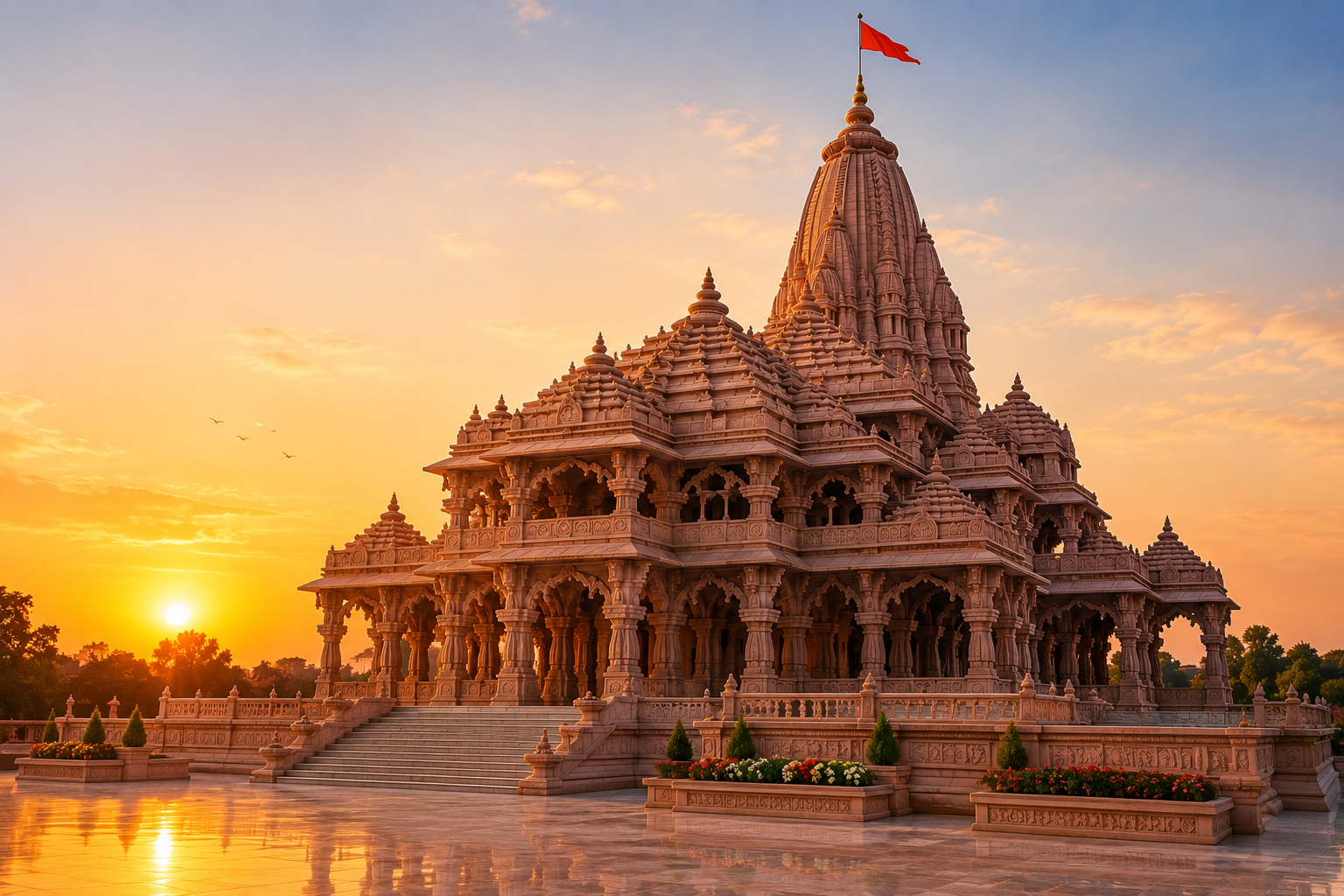
History: Ram Mandir stands at Ram Janmabhoomi, the site revered as the birthplace of Lord Shri Ram. After the 2019 Supreme Court verdict, the Shri Ram Janmabhoomi Teerth Kshetra Trust was formed to build the temple, and the Pran Pratishtha (consecration) of Ram Lalla was performed on 22 January 2024.
Religious Significance
This is the most sacred point in Ayodhya for devotees of Lord Ram. Pilgrims from across the world come here for darshan of Ram Lalla, the child form of the Lord, whose idol sits under a silver canopy in the sanctum sanctorum.
Architecture
The temple is built in the traditional North Indian Nagara style, rising across three floors and five mandaps. It is crafted from pink Bansi Paharpur sandstone, with finely carved pillars, courtyards, and a soaring shikhara. The 71-acre complex also includes a parikrama path, prayer halls, and developing parkota (boundary) walls.
Why Visit
A single darshan here fulfils a lifelong wish for many devotees. It is the culmination of centuries of faith and the spiritual centrepiece of any Ayodhya pilgrimage.
At a Glance
- Best Time to Visit: Early morning or late evening for smaller crowds. October to March is the most comfortable season—see our Best Time to Visit Ayodhya guide for details.
- Approximate Visit Duration: 1 to 2 hours, longer on weekends and festivals.
- Nearby Attractions: Hanuman Garhi, Kanak Bhawan, Ram Ki Paidi, and the evening Saryu Aarti.
- Travel Tips: Free darshan passes for aarti are released online by the temple trust. Leave leather items, large bags and electronics in the lockers, and follow the queue system.
For most pilgrims, darshan at Ram Mandir is the emotional heart of the trip, so planning your pass and timing in advance makes the experience far more peaceful.
2. Hanuman Garhi
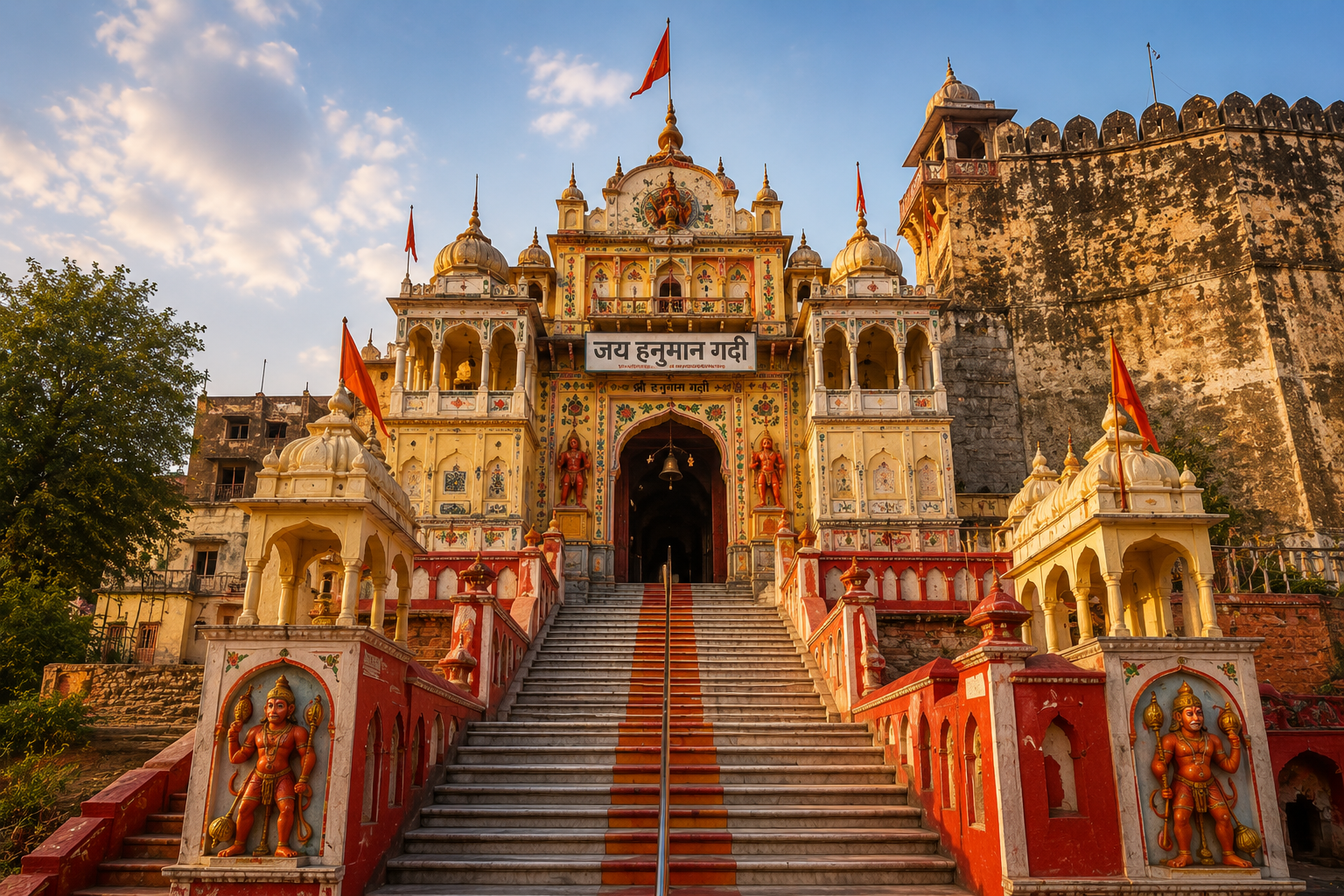
History: Hanuman Garhi is one of Ayodhya's oldest and most beloved temples. According to tradition, Lord Hanuman lived here while guarding the city of Ayodhya, and the shrine has been tended by devotees for generations.
Religious Significance
It is a long-standing custom to visit Hanuman Garhi before going to Ram Mandir. Devotees believe that seeking Hanuman's blessings first opens the way to darshan of Lord Ram. The sanctum houses Bal Hanuman seated in the lap of his mother Mata Anjani.
Architecture
The temple is a fort-like structure on a raised hillock, reached by a flight of steps. Its white walls, gateway, and inner courtyards give it a calm, fortress-like charm that stands apart from the larger temples nearby.
Why Visit
Beyond its spiritual importance, Hanuman Garhi offers a deep sense of peace and a wonderful vantage point over the old city lanes of Ayodhya.
At a Glance
- Best Time to Visit: Early morning, around 5:00 to 6:30 am, when the shrine is calm. Tuesdays and Saturdays draw larger crowds.
- Approximate Visit Duration: 30 to 45 minutes.
- Nearby Attractions: Ram Mandir, Dashrath Mahal, Kanak Bhawan, and Sita Ki Rasoi.
- Travel Tips: Leave footwear at the shoe stand at the base. Senior citizens may need assistance on the steps.
A quiet morning visit here sets a peaceful tone for the rest of your temple circuit.
3. Kanak Bhawan
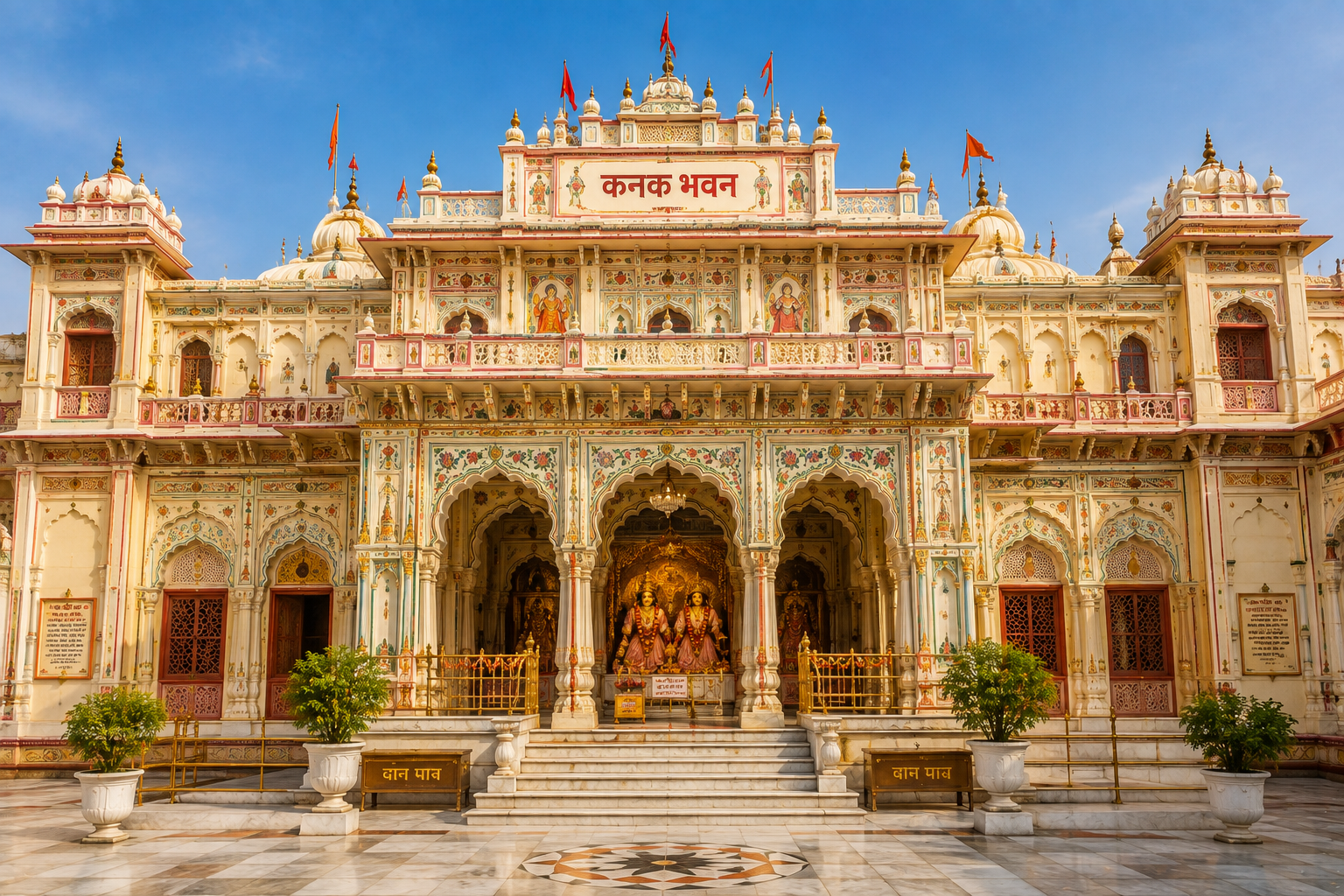
History: Kanak Bhawan, meaning "Golden Palace," is closely associated with the wedding of Lord Ram and Mata Sita. Legend says it was gifted to Sita by Queen Kaikeyi. The present temple was built in 1891 by Vrishbhanu Kunwari, a queen of the Orchha royal family.
Religious Significance
The temple is cherished for its divine wedding imagery. In the sanctum, Mata Sita is placed on the left of Lord Ram—a rare and beloved depiction—and the couple is shown with their brothers, evoking the joy of their marriage.
Architecture
The inner walls and ceilings are adorned with gold leaf, giving the temple its name and its radiant glow. Carved arches, a spacious courtyard, and ornate sikharas make it one of the most visually striking temples in Ayodhya.
Why Visit
The golden interiors and the serene wedding darshan make Kanak Bhawan a highlight for devotees and one of the most photographed temples in the city.
At a Glance
- Best Time to Visit: Mornings for the best lighting; special decorations during Ram Navami and Deepotsav.
- Approximate Visit Duration: 30 to 45 minutes.
- Nearby Attractions: Ram Mandir, Dashrath Mahal, Sita Ki Rasoi, and Hanuman Garhi.
- Travel Tips: Photography inside the sanctum is usually restricted, so check before clicking and dress modestly.
Pair Kanak Bhawan with Dashrath Mahal and Sita Ki Rasoi, which are just a short walk away.
4. Dashrath Mahal
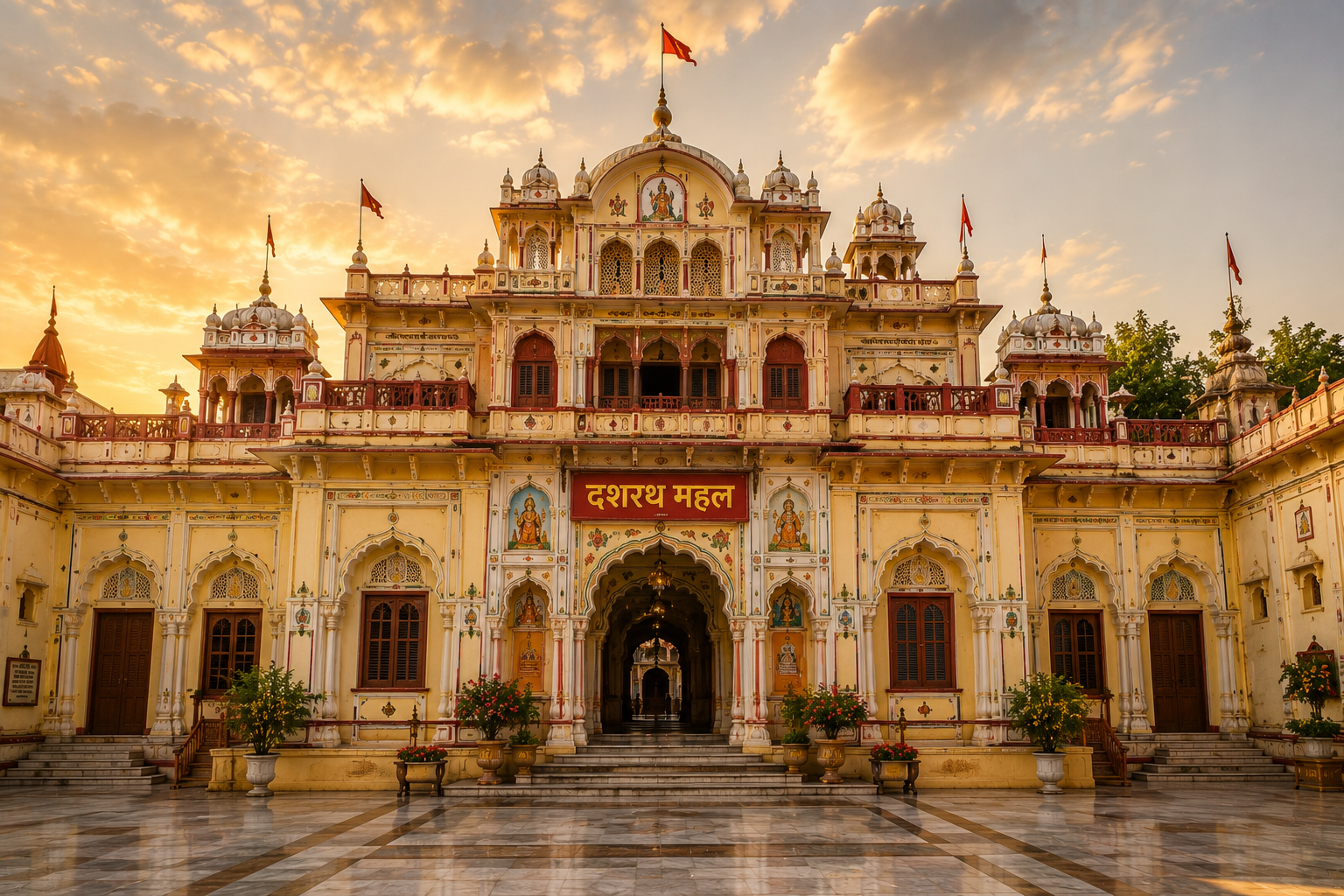
History: Dashrath Mahal is believed to stand on the site of the royal palace of King Dashrath, the father of Lord Ram and a king of the Suryavanshi dynasty. The present temple was built in the early 20th century and has been cared for by the Ayodhya math over the years.
Religious Significance
Here devotees pay respects to King Dashrath along with the entire Ram family. The shrines hold idols of Lord Ram, Mata Sita, the three brothers, and Dashrath with his queens, offering a glimpse into the household at the heart of the Ramayana.
Architecture
The temple is modest and traditional, with a calm courtyard and simple sikharas. Its quiet, less-crowded atmosphere makes it a peaceful stop on the temple trail.
Why Visit
Dashrath Mahal adds the family dimension to your pilgrimage, reminding visitors that the Ramayana is also a story of parents, brothers, and home.
At a Glance
- Best Time to Visit: Daytime; it pairs naturally with the nearby temples.
- Approximate Visit Duration: 20 to 30 minutes.
- Nearby Attractions: Hanuman Garhi, Kanak Bhawan, Ram Mandir, and Sita Ki Rasoi.
- Travel Tips: A quiet spot to rest between temples; please maintain a respectful silence inside.
It is a gentle, reflective stop that rounds out the story of Lord Ram's family.
5. Nageshwarnath Temple
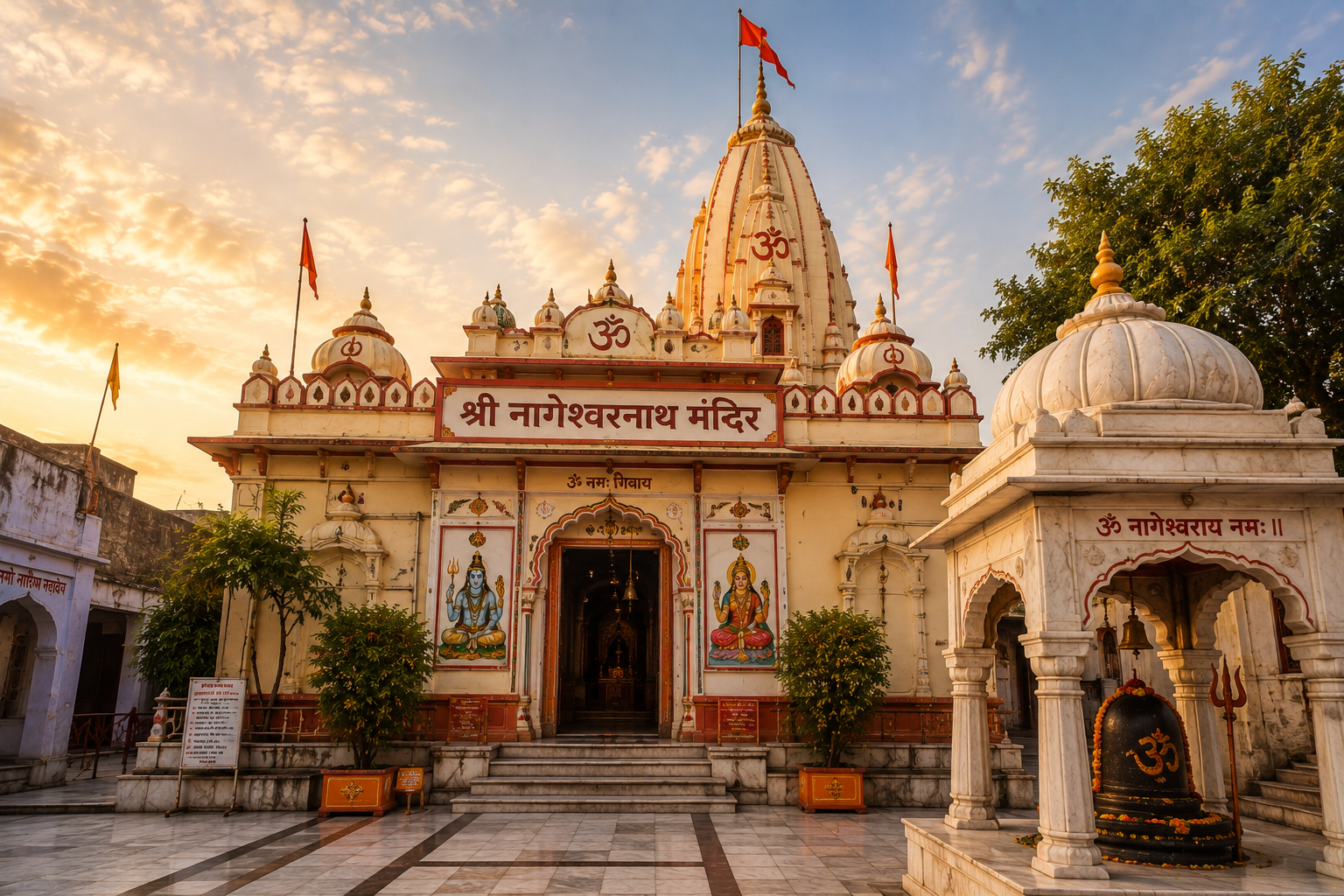
History: Nageshwarnath is one of the oldest Shiva temples in Ayodhya. Legend says it was established by Kush, the younger son of Lord Ram. When Kush lost his armlet in the Saryu, a naga-kanya, a devotee of Lord Shiva, returned it; pleased by her devotion, Kush built this Shiva shrine. It is said this temple helped later kings rediscover Ayodhya's sacred sites when the city lay hidden under forests.
Religious Significance
Devotees worship the Shiva linga here for blessings and peace. Mahashivratri is celebrated with great fervour, drawing large crowds, and a holy dip in the nearby Saryu is considered especially meritorious.
Architecture
The temple follows a traditional layout with a sanctum housing the Shiva linga and Nandi facing the Lord. Its riverside setting adds to the serenity.
Why Visit
Nageshwarnath connects pilgrims with the Treta-era legacy of Ayodhya and offers a peaceful riverside atmosphere away from the busier temple cluster.
At a Glance
- Best Time to Visit: Mahashivratri is the grandest time; otherwise early mornings are ideal.
- Approximate Visit Duration: 20 to 30 minutes.
- Nearby Attractions: Guptar Ghat, Ram Ki Paidi, the Saryu Aarti, and Treta Ke Thakur.
- Travel Tips: Combine this with a visit to the Saryu ghats; the riverside is especially pleasant at sunset.
It is a serene link between Ayodhya's temples and its sacred riverfront.
6. Treta Ke Thakur
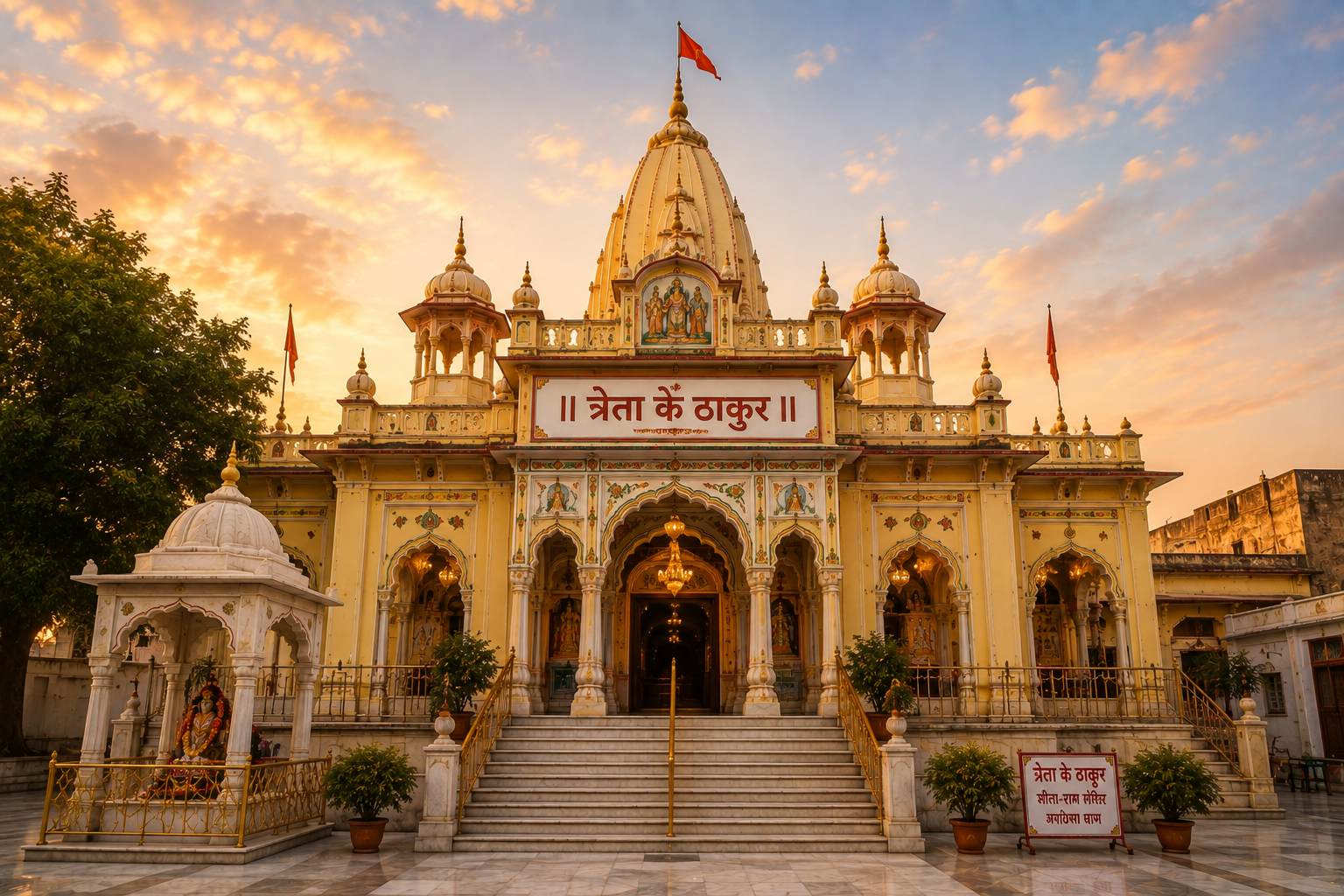
History: Treta Ke Thakur marks the site where Lord Ram is believed to have performed the Ashwamedha Yagya after his return to Ayodhya. The present temple enshrines black-stone (krishna shila) idols of Ram, Sita, Lakshman, Bharat, Shatrughna, and Hanuman, which were installed by a later king and remain objects of deep veneration.
Religious Significance
The temple links devotees to the yagya tradition of the Treta Yuga. A fair is held here during the month of Kartik, when pilgrims gather in large numbers.
Architecture
A traditional temple with carved black-stone idols and an older, quieter sanctum. Its slightly removed location keeps it peaceful and unhurried.
Why Visit
It offers a chance to stand at the site of one of the most legendary rituals of the Ramayana, away from the main crowds.
At a Glance
- Best Time to Visit: Mornings; the Kartik fair is especially vibrant.
- Approximate Visit Duration: About 30 minutes.
- Nearby Attractions: Nageshwarnath Temple, Guptar Ghat, and the Saryu banks.
- Travel Tips: This temple sits a little apart from the main cluster, so plan transport in advance and pair it with Nageshwarnath.
It rewards the small extra journey with a profound sense of stillness.
7. Sita Ki Rasoi
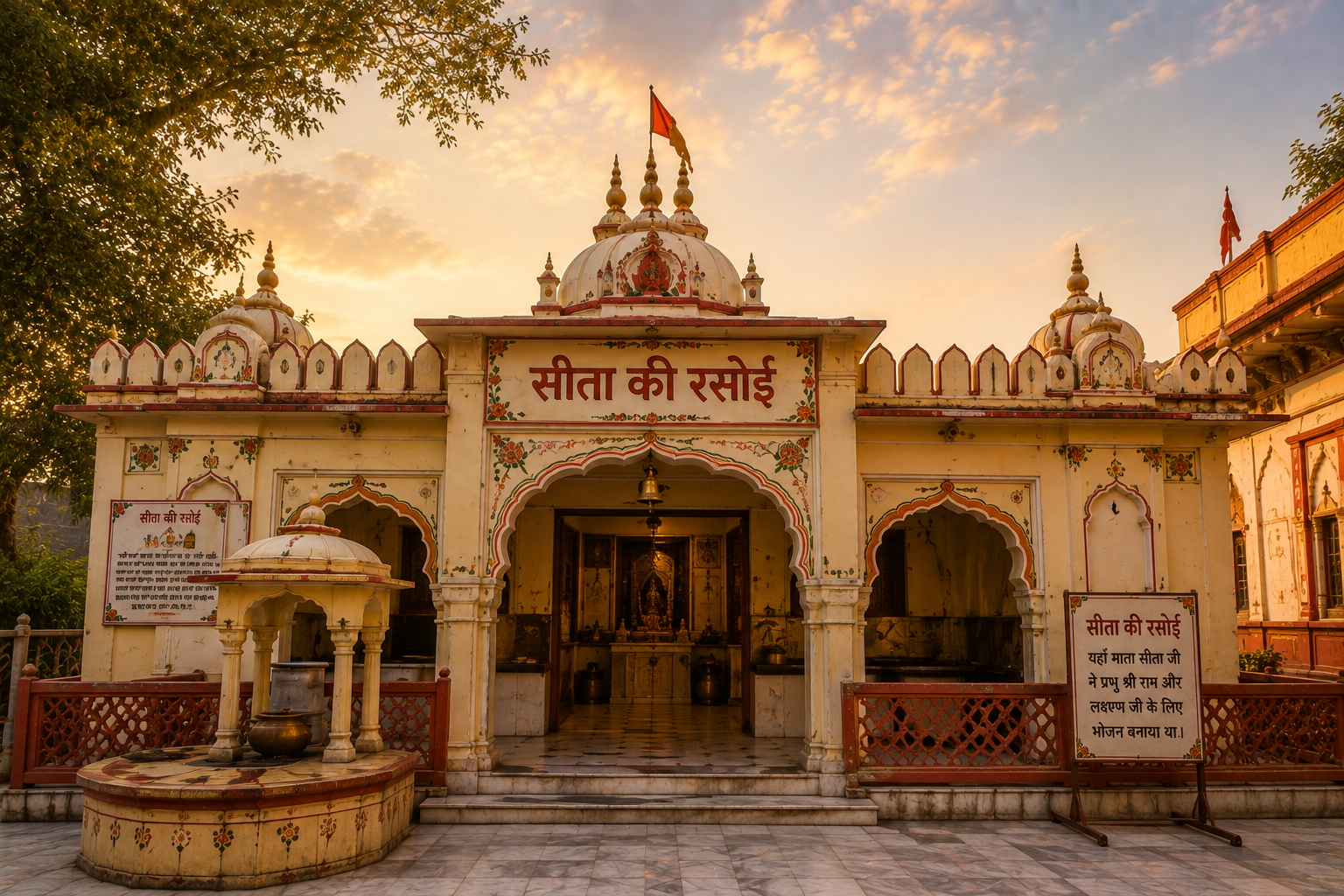
History: Sita Ki Rasoi is revered as the kitchen of Mata Sita from the time she arrived in Ayodhya after her marriage. The temple sits on a raised platform and is one of the more intimate shrines in the temple cluster.
Religious Significance
Devotees see it as the divine kitchen of the royal household. The sanctum depicts Mata Sita serving food, with Lord Ram and his brothers present, evoking the warmth of the family home.
Architecture
A small, elevated temple with a courtyard and a charming tableau inside. Its compact size makes it a quick yet memorable stop.
Why Visit
Sita Ki Rasoi offers a tender, household glimpse of the divine couple that few other temples capture so closely.
At a Glance
- Best Time to Visit: Daytime; combine it with nearby Kanak Bhawan.
- Approximate Visit Duration: 15 to 20 minutes.
- Nearby Attractions: Kanak Bhawan, Dashrath Mahal, Ram Mandir, and Hanuman Garhi.
- Travel Tips: A short, respectful visit; also a convenient place to pause between temples.
It is a gentle reminder that devotion often lives in the smallest, most everyday moments.
8. Mani Parbat
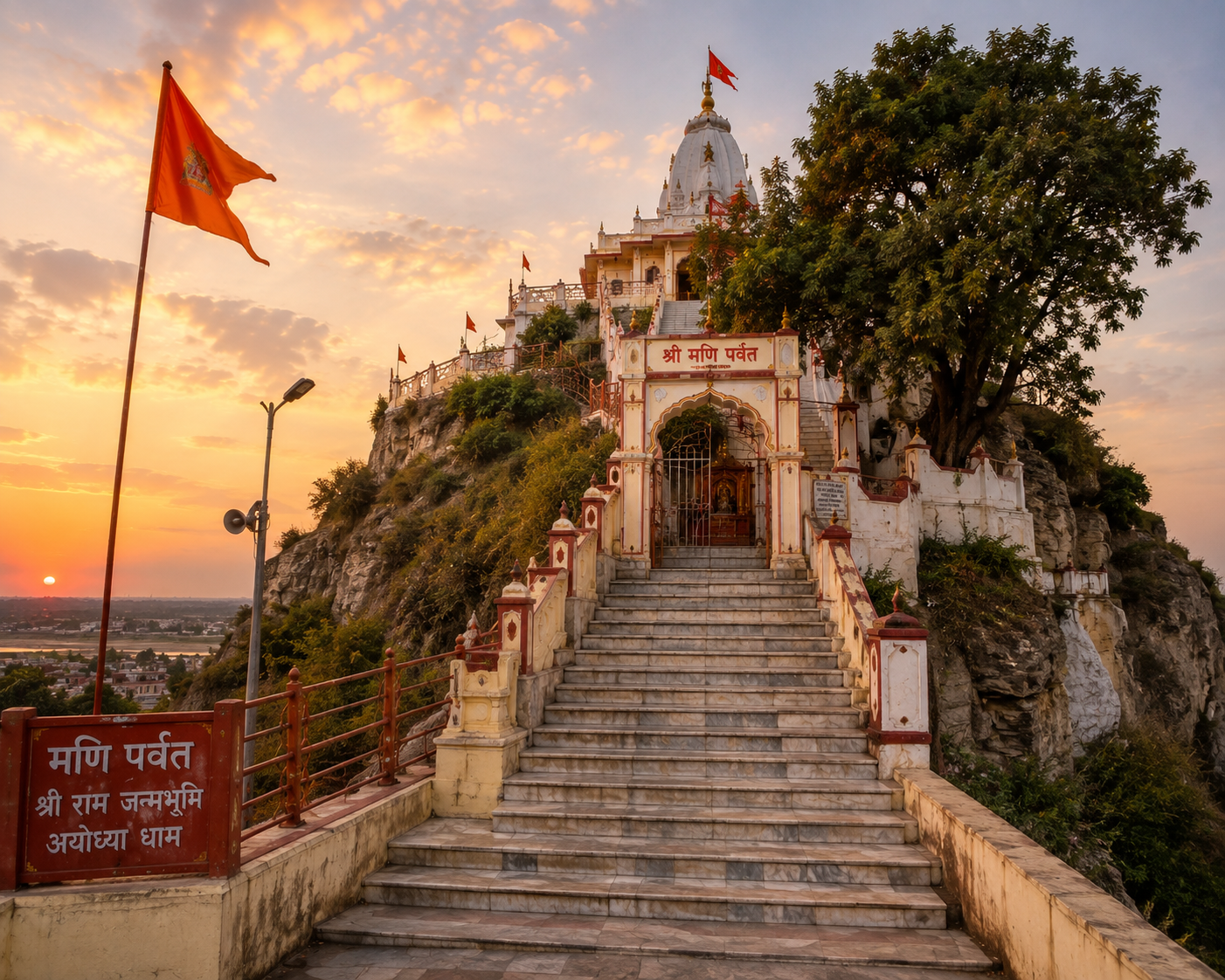
History: Mani Parbat is a sacred hill believed to be a fragment that fell from the Sanjeevani mountain when Lord Hanuman carried it to Lanka. The hill also holds the remains of an ancient Buddhist stupa from the Mauryan era, making it sacred to both Hindus and Buddhists.
Religious Significance
Pilgrims climb the hill to visit small shrines and to take in sweeping views of Ayodhya and the Saryu. Its layered heritage makes it a unique symbol of the city's shared spiritual history.
Architecture
A stepped hill crowned with modest shrines and the remnants of an old stupa. The climb is short but rewards visitors with a quiet, panoramic resting point.
Why Visit
For sunrise or sunset views and a peaceful, off-the-beaten-path experience that complements the busier temple visits.
At a Glance
- Best Time to Visit: Sunrise or sunset; October to March is most comfortable.
- Approximate Visit Duration: About 45 minutes.
- Nearby Attractions: The Saryu riverfront, Guptar Ghat, and Nageshwarnath Temple.
- Travel Tips: Wear comfortable shoes for the climb, carry water, and note that the path may be difficult for visitors with severe mobility issues.
Closing the temple trail at Mani Parbat at sunset is a quiet, fitting end to a day of darshan.
Suggested One-Day Temple Circuit
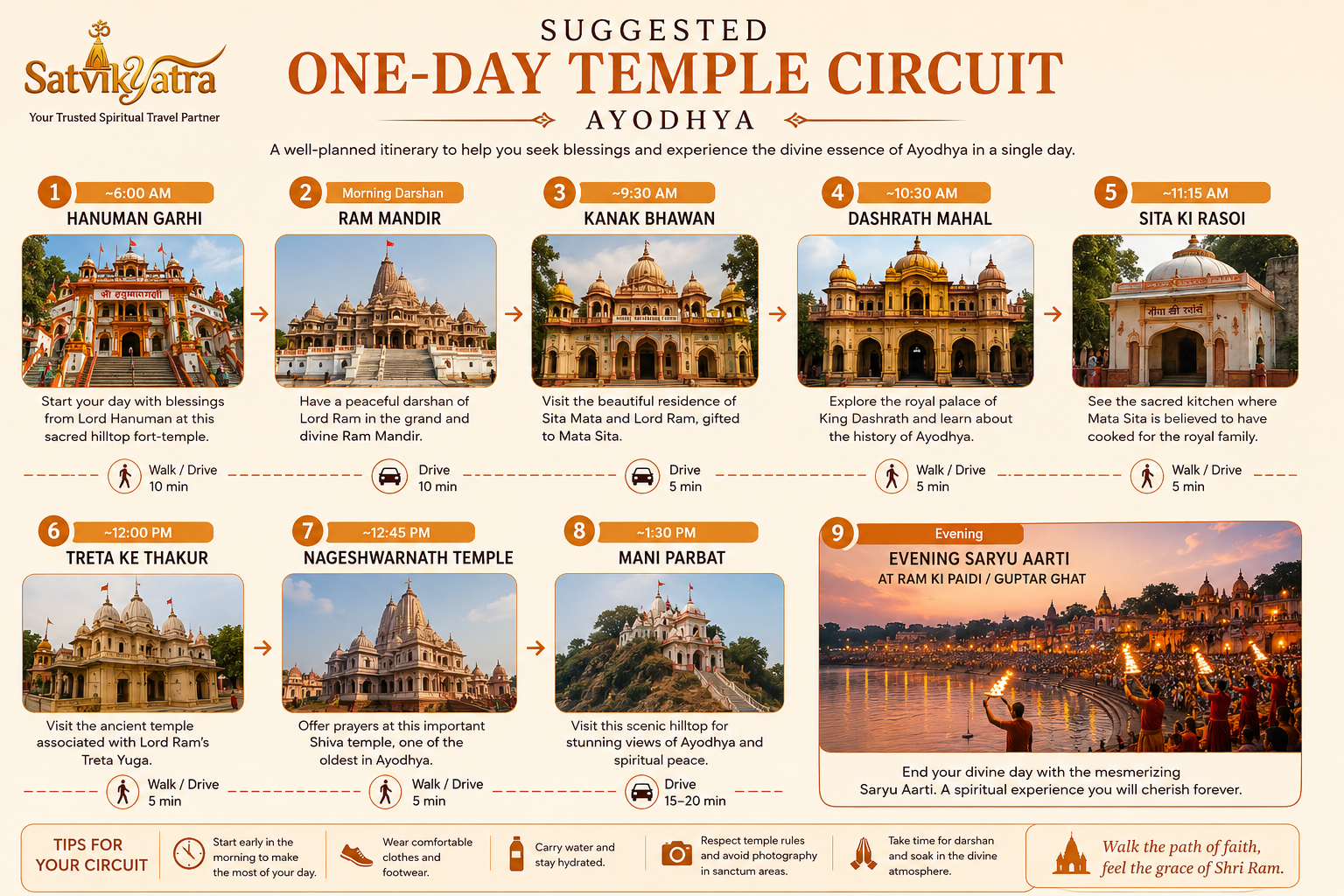
If you have a single day, this route lets you cover the top temples to visit in Ayodhya with minimal backtracking:
- Hanuman Garhi (early morning, ~6:00 am)
- Ram Mandir (morning darshan)
- Kanak Bhawan
- Dashrath Mahal
- Sita Ki Rasoi
- Treta Ke Thakur
- Nageshwarnath Temple
- Mani Parbat (late afternoon)
- Evening Saryu Aarti at Ram Ki Paidi / Guptar Ghat
This order saves travel time because it follows the temples in a loose, walkable sequence from the Janmabhoomi cluster outward to the riverside. Hanuman Garhi first honours the local tradition of seeking Hanuman's blessings before Ram darshan, and the central temples (Kanak Bhawan, Dashrath Mahal, Sita Ki Rasoi) are within a short walk of one another. Treta Ke Thakur and Nageshwarnath sit toward the river, so they pair naturally, and Mani Parbat rounds off the circuit before you head down to the ghats for the evening aarti.
For a slower pace with elderly family members, split this across two days or pair it with our One-Day Ayodhya Itinerary.
Essential Tips for Visiting Ayodhya Temples
- Dress Code: Wear modest, traditional clothing. For men, kurta-pajama or shirt and trousers; for women, saree, salwar suit, or kurti. Avoid revealing clothes.
- Footwear: Shoes must be removed before entering any temple. Use the designated shoe stands, many of which charge a small fee.
- Photography: Photography is usually allowed in courtyards and outside but is restricted inside most sanctums, including at Ram Mandir. Always check before clicking.
- Locker Facilities: At Ram Mandir and major temples, store bags, leather items, and valuables in the provided lockers before entering.
- Mobile Phones: Phones may be permitted in some areas but must be on silent. Photography on phones inside sanctums is generally not allowed.
- Senior Citizens: Begin early, carry water, and pace the circuit with rest stops. Many temples have priority queues for the elderly.
- Children: Keep children close in crowds, carry snacks and water, and explain silence inside temples in advance.
- Wheelchair Accessibility: Ram Mandir and several key temples have ramps and wheelchair support; Hanuman Garhi and Mani Parbat involve steps and may be difficult for wheelchair users.
- Festival Crowds: Ram Navami, Deepotsav, and Mahashivratri bring huge crowds. Book hotels and transport early and expect longer wait times.
- Summer Travel: From April to June, visit temples before 9:00 am and after 5:00 pm, carry water, and wear light cotton clothes and a cap.
- Winter Travel: October to March is ideal—carry a light layer for early-morning and evening aarti.
- Safety: Keep valuables secure, carry a copy of your ID, and save local emergency contacts.
- Local Etiquette: Greet with respect, follow the queue, accept prasad with the right hand, and keep the temple premises clean.
A little preparation goes a long way in keeping your pilgrimage peaceful and unhurried.
Frequently Asked Questions
What are the top temples to visit in Ayodhya?
The most visited temples are Ram Mandir, Hanuman Garhi, Kanak Bhawan, Dashrath Mahal, Nageshwarnath Temple, Treta Ke Thakur, Sita Ki Rasoi, and Mani Parbat. Each is covered in detail above.
How many days are enough for an Ayodhya temple tour?
One well-planned day covers the major temples and the evening Saryu Aarti. Two days allow a more relaxed pace and time for nearby sites like Guptar Ghat.
Which temple should I visit first in Ayodhya?
By tradition, devotees visit Hanuman Garhi first and then proceed to Ram Mandir. Many pilgrims also prefer early-morning Ram Mandir darshan for smaller crowds.
Is there an entry fee for the temples in Ayodhya?
Darshan at most temples, including Ram Mandir, is free. Aarti passes are released online by the temple trust. For a full budget, see our Ayodhya Tour Cost Guide.
What is the best time to visit the Ayodhya temples?
October to March offers the most comfortable weather, with pleasant mornings and evenings. See our Best Time to Visit Ayodhya guide for a season-wise breakdown.
Are the temples near Ram Mandir within walking distance?
Yes. Hanuman Garhi, Kanak Bhawan, Dashrath Mahal, and Sita Ki Rasoi are all within easy walking distance of the Ram Mandir.
Is photography allowed inside the temples?
Photography is usually fine in courtyards and outside, but it is restricted inside most sanctums, including at Ram Mandir. Always check the signage and temple staff first.
Are the temples accessible for senior citizens and wheelchair users?
Ram Mandir and several major temples offer wheelchair access and priority queues for senior citizens. Hill sites like Hanuman Garhi and Mani Parbat involve stairs and may be challenging.
What should I wear when visiting Ayodhya temples?
Modest, traditional clothing is recommended—kurtas, sarees, or salwar suits. Avoid shorts, sleeveless tops, and revealing outfits inside temple premises.
Can I cover all the temples in one day?
Yes, the suggested one-day circuit above covers all eight temples plus the evening Saryu Aarti. Start early and pace your stops for a comfortable experience.
How far is Hanuman Garhi from Ram Mandir?
Hanuman Garhi is about a kilometre from the Ram Mandir and can be reached on foot in roughly 10 to 15 minutes.
What is the Saryu Aarti and where does it happen?
The Saryu Aarti is a beautiful evening prayer ceremony held at Ram Ki Paidi and Guptar Ghat along the river. It is a serene way to end a day of temple darshan.
Plan Your Spiritual Journey with Satvik Yatra
A pilgrimage should feel peaceful, not rushed or stressful. At Satvik Yatra, we help you experience Ayodhya with care, comfort, and devotion.
We provide:
- Hotel booking close to the temple cluster, so you spend less time travelling and more time in darshan.
- Comfortable cabs with courteous drivers who know the temple routes and the best times to visit.
- Temple sightseeing arranged in a sensible sequence, including the Saryu Aarti.
- Customized Ayodhya tour packages for families, senior citizens, and groups. To understand pricing, see our Ayodhya Tour Cost Guide, or explore our Ayodhya tour packages.
Whether it is your first visit or a return pilgrimage, we tailor every detail to your pace and preferences.
Let Satvik Yatra take care of the planning while you focus on your spiritual journey.